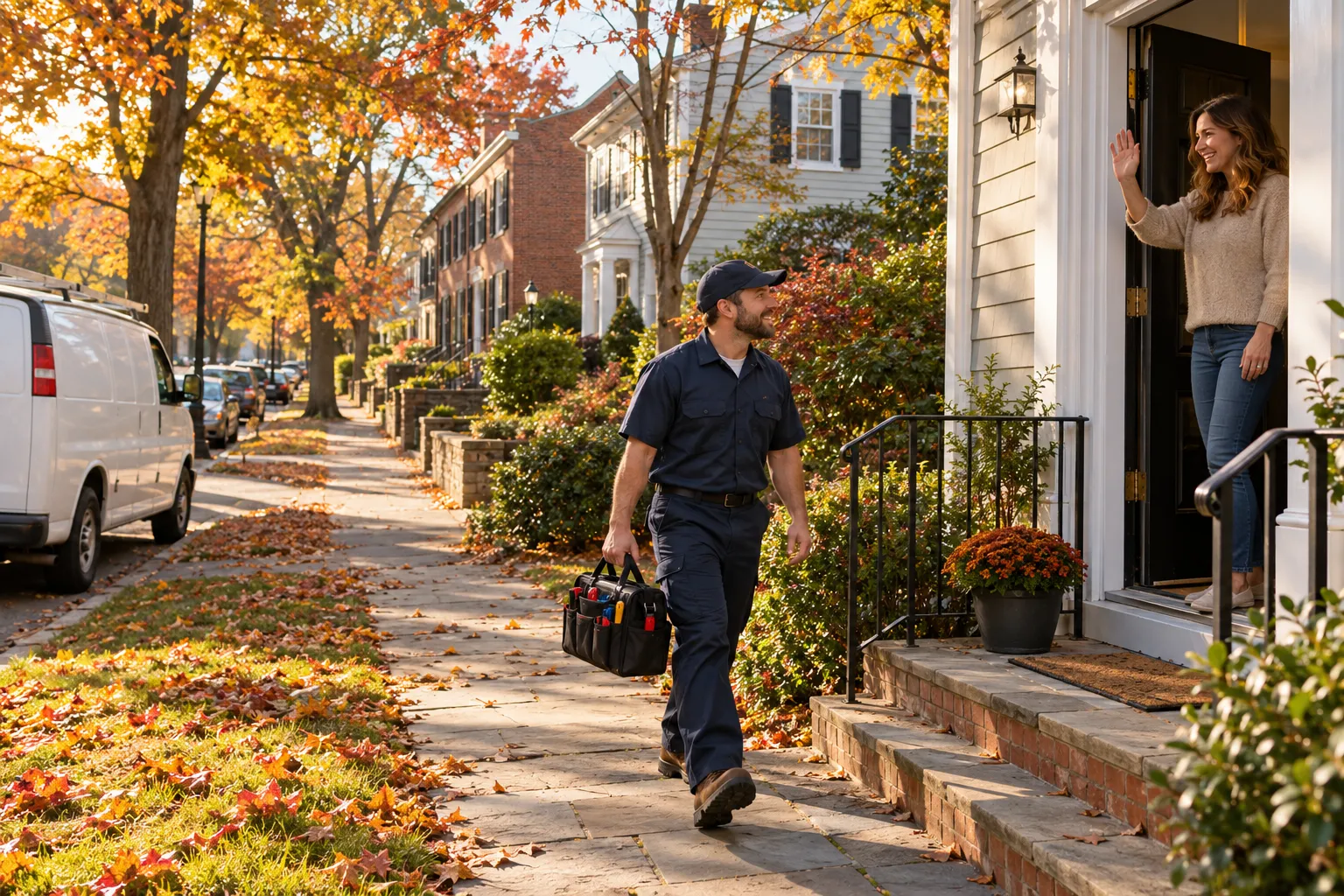
Need emergency plumbing in Baltimore?
Have a plumbing problem in Baltimore? Send a quick estimate request, or Request a callback to check provider availability. Tell us what is happening and we will point you to a local provider.
No obligationRequest an estimate and take one clear step
A burst pipe, a backed-up toilet or a leak behind the wall can hit at the worst moment. You may have school pickups, work and dinner to manage. Positionsprocedure Plumbing is a referral service that links homeowners in the Baltimore area with independent local plumbing providers.
Here is how it works. You share a few details about the problem. A provider in our network can review it and give you an estimate. The provider does the work, not Positionsprocedure Plumbing. Many providers can respond quickly, though availability varies. Calm start, clear estimate, and a plan that fits your day.
Water is where it should not be, and your calendar is already full. That feels awful. Take a breath. Most plumbing emergencies can be handled one step at a time.
The first step is to slow the damage. The second is to reach a local provider who can look at it. Positionsprocedure Plumbing helps with that second step by connecting you with independent providers in our network.
Not every drip needs a rush visit. Some problems cannot wait, though. Here are signs that you should reach out soon:
A slow drip under a sink is different. It still needs fixing, but you can often plan it for a better time.
While you wait for a provider, a few small steps can protect your home.
If you cannot reach the shutoff, do not force it. Tell the provider so they can plan for it.
Water spreads quietly. It soaks drywall, floors and the wood inside walls. Damp spaces can grow mold in a few days, especially in humid summers.
A small leak is often a simple fix. A leak left alone can turn into a bigger repair and a messier house. Acting early usually means less work, less noise and less time with strangers in your home.
A provider starts by finding the source. They may check pipes, valves, fittings and fixtures. Then they explain what they found in plain words.
Next comes a stop-gap or a full fix. That might mean sealing a split pipe, swapping a failed valve or replacing a short run of tubing. For larger problems, the provider may stabilize things first and then schedule the rest of the work.
You should get an estimate before the main work starts. Ask for it in writing.
Winters here swing between freezing and thawing. Water inside a pipe expands as it turns to ice. The pipe can crack, and you may not see the damage until it thaws.
If a pipe freezes but has not burst, open the faucet a little and warm the area gently. Never use an open flame. If you see a crack or water spraying, shut off the main valve and reach out to a provider.
Pipes in unheated basements, garages and outside walls are the usual trouble spots.
Many local homes have basements, and many have aging cast-iron or galvanized pipes. These can rust, narrow inside and leak at the joints. Row homes in older areas may share walls, so one leak can affect a neighbor too.
In summer, damp air makes small leaks harder to spot. A musty smell, peeling paint or a new stain can be a clue. A provider can check the pipes and tell you whether a repair is enough or if a larger plan makes sense.
A water heater that leaks from the tank, rumbles loudly or gives only cold water needs a look. Turn off the power or gas to the unit and shut the cold water supply valve to it.
Some heaters can be repaired. Others are worn out and need replacing. A provider can explain both choices and give you a clear estimate for each.
You do not have to put your whole week on hold. Tell the provider about your schedule when you ask for an estimate. Mention school runs, work calls, naps and pets.
Many providers can set a work window that fits your day. Ask where they will park, which rooms they need and how long the water may be off. A short heads-up helps everyone in the house know what to expect.
A good provider is easy to talk to. Look for these things:
Prices and availability differ, so you may want to compare. Never feel rushed into a bigger job than you need.
Once the water is back on, walk through with the provider. Check the repaired spot for drips. Ask what to watch for over the next few days.
Keep your photos, the written estimate and the final invoice. Some policies may cover sudden damage, so check your policy and speak with your insurer.
Dry out the wet area well. Fans and open windows help. If drywall or flooring stayed wet, ask the provider whether other help is needed.
A little planning lowers the odds of a surprise. Before winter, insulate exposed pipes and disconnect outdoor hoses. Before storm season, make sure your sump pump and floor drains work. In summer, watch for damp spots and musty smells.
Know where your main shutoff is, and show everyone in the house. That one small habit can save a lot of stress later.
Providers in our network can look at burst, cracked or leaking pipes, find the source, and stop the water so damage does not spread.
Failed valves, toilets and faucets that will not shut off can be checked and fixed by a local provider.
A provider can inspect a leaking or failing tank and explain whether repair or replacement suits you.
Providers can thaw, inspect and repair pipes hurt by freeze-thaw winters, and suggest ways to protect them.
Prices change with the pipe, the damage and the time of day. These are typical U.S. ranges only. Ask for a written quote before work starts, and compare if you can.
| Service | Typical range | Notes |
|---|---|---|
| Emergency service visit | $100 – $300 | Often a trip or diagnostic charge |
| Burst pipe repair | $150 – $1,000 | Depends on access and pipe type |
| Shutoff valve replacement | $150 – $500 | Older valves may cost more |
| Toilet or fixture repair | $100 – $450 | Parts vary by model |
| Water heater repair | $150 – $800 | Replacement costs more |
| Water heater replacement | $1,200 – $3,500 | Tank size and fuel type matter |
Tell us what is happening and where, so the request reaches a suitable local provider.
A provider in our network looks at the problem and gives you a clear estimate.
Choose a time that works around school, jobs and home life.
The independent provider fixes the problem, explains what changed and shows you the result.
You share the problem once, and we point you toward a local provider without a long search.
Ask for a written estimate so you know the plan and price before the work begins.
Providers in our network know area homes, from older basements to newer split-levels.
Tell providers your schedule so the work can be planned around your family.
Have a plumbing problem in Baltimore? Send a quick estimate request, or Request a callback to check provider availability. Tell us what is happening and we will point you to a local provider.
No obligationShut off the main water valve right away. Then turn off power near any wet areas if it is safe. Move belongings away from the water, take photos, and request an estimate from a local provider to fix the pipe.
Many providers can respond quickly, but availability depends on the provider and the day. Request a callback to check provider availability, or send a request so a local provider can review your problem.
Some policies may cover sudden damage, but coverage differs a lot. Check your policy and speak with your insurer. Providers can often help document damage for a claim.
Have a plumbing problem in Baltimore? Send a quick estimate request, or Request a callback to check provider availability. Tell us what is happening and we will point you to a local provider.
No obligation